While attending Brown Precollege program “Characterizing C. Elegans Using Reverse Genetics”, I, along with two of my classmates, have been studying what happens when the protein EAK103 is knocked down from C. Elegans.
EAK103 is a mutated version of the human Huntingtin protein. In humans, Huntingtin is found in many body tissues, and an excessive production causes the neurological dysfunction of Huntington’s Disease. In the C. Elegans worms, however, the mutated Huntingtin is found in the body cell wall instead of other tissues.
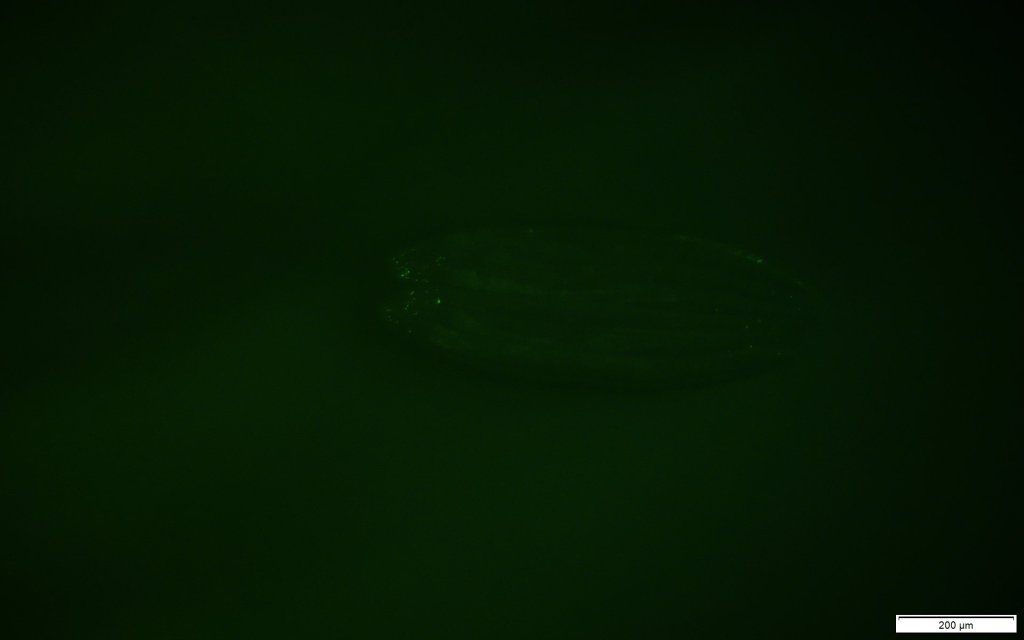
This is an image of the L4440 C. Elegans screening. This strain is the control, and as depicted, there is little to no puncta shown within the worm. This is because no gene in the worm is affecting the Huntingtin protein.
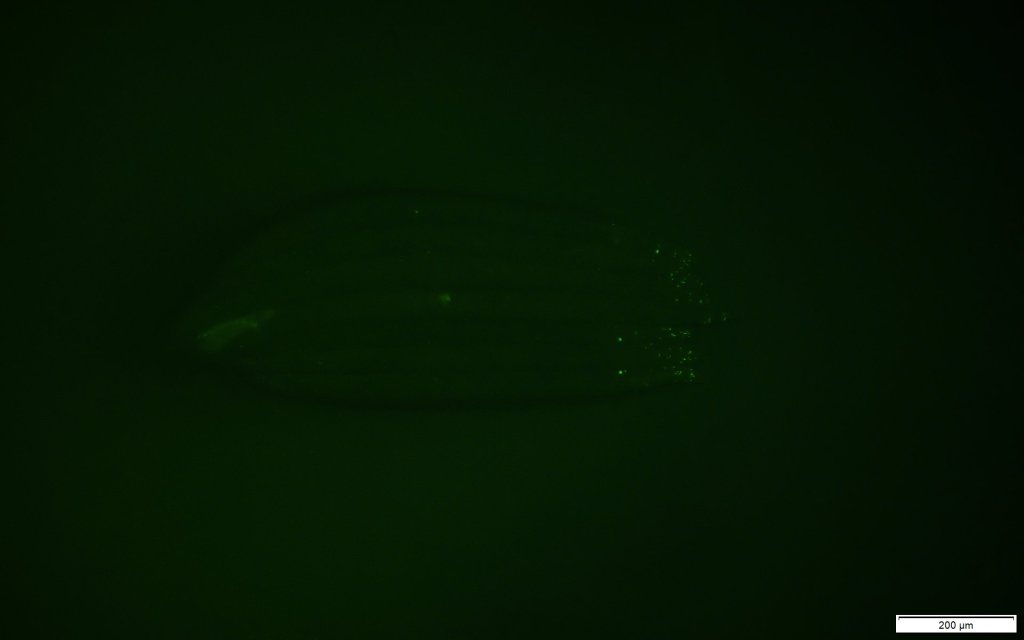
Below are images of the fat-6, hlh-30, lbp-3, and plin-1 screenings (respectively). As seen in the screens, more puncta is shown for each strain depending on how the gene affects the protein. More puncta means more protein is present.
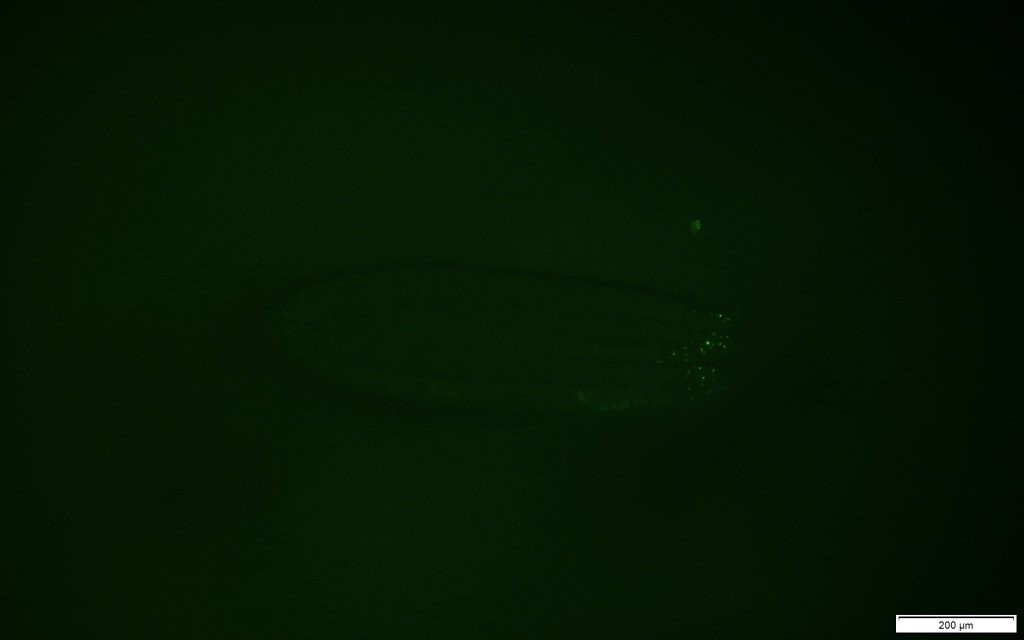
fat-6
hlh-30

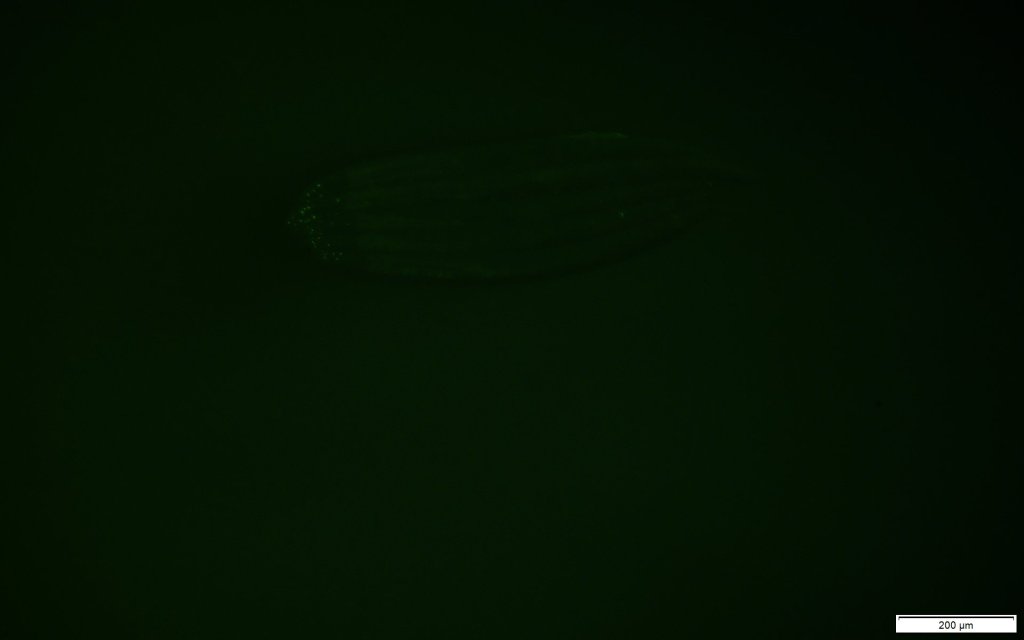
lbp-3
plin-1
 Mytochondria
Leave a comment